
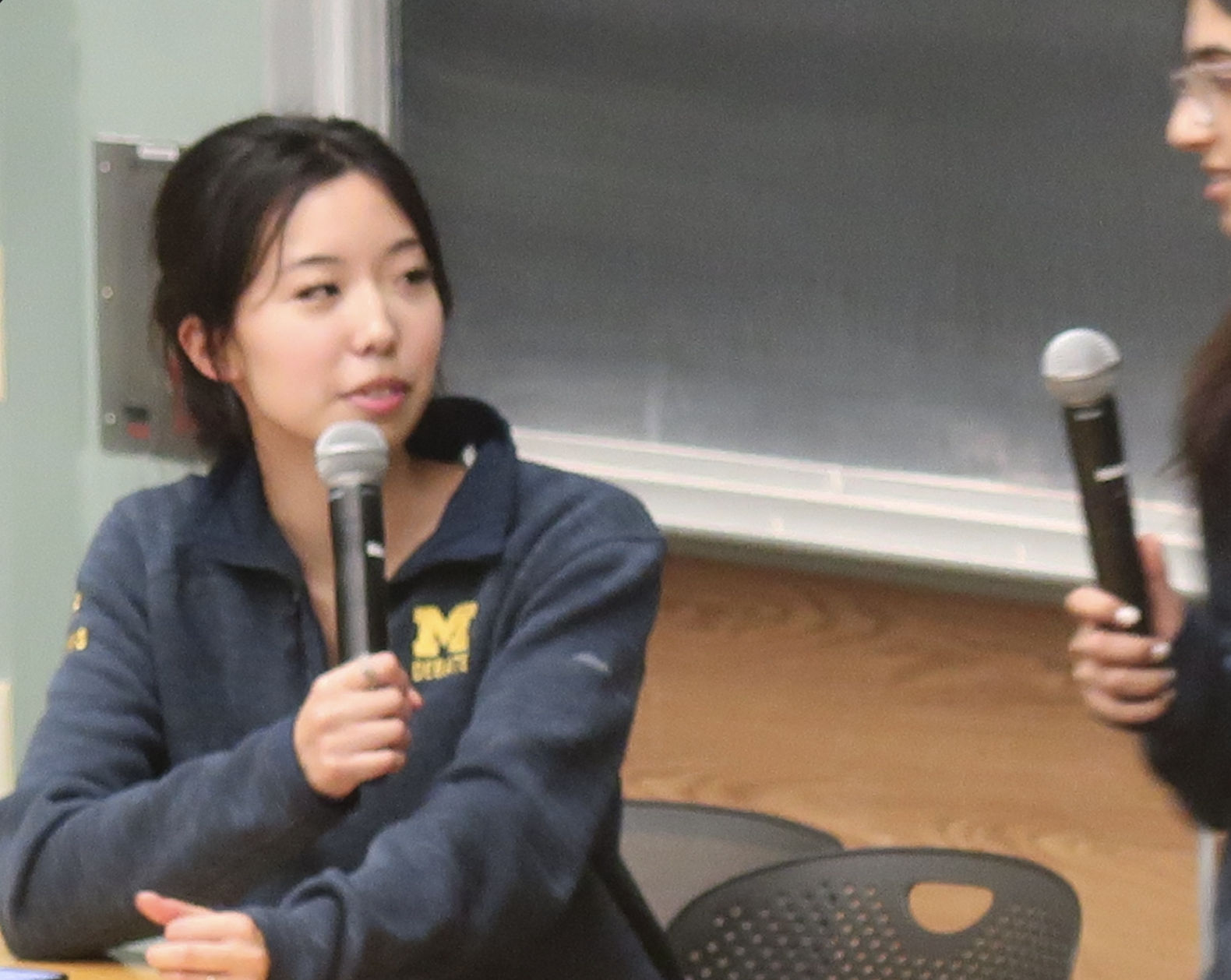
Being a woman in debate has felt very mixed and challenging to me. I think I started really noticing it my sophomore year of debate, right after I had qualified to the TOC my first time. I found out that in a group chat full of debate guys in my year, there were over 100 messages shit talking me, calling me a terrible speaker and making fun of how they would “kill me without losing a single debate” at camp. This same group of guys has continued to, and still does, make rape jokes to talk about how badly they will beat somebody else in a debate. While I’ve tried to become friends with a lot of them by now, it’s always disappointing to think of how unseriously they view rape and the sexist jokes they will all make, insulated from outside scrutiny from somebody who is affected by their rhetoric. This has been a problem for the entire history of debate, where guy debaters are often either very blatantly or more subtly sexist.
This was magnified for me at debate camp my junior year, when I partnered with a guy who had more reputation than me. I remember my own friends coming up to me, asking if he scripted my 2NRs and wrote all my speeches, and then the next day asking if I was a 2A: something that happened multiple times, and something that I felt they did to make me feel bad at debate, since they were fully aware of my speaker position and also believed being a 2A was a sign of being the “worse partner”. They would console me that I’d be okay in my next debate because of my partner, and never because of my own merit, despite the fact that I proved myself over and over again. I saw that no matter how successful I was, how high my speaker points, or how many debates I won, I would never be treated as equal to some guy debaters who had done none of this.
So my junior year, my main goal was to prove myself, something that was extremely unfair because I had to earn respect from guy debaters instead of it automatically being granted. I still saw that throughout the entirety of high school, where some of the best guy debaters would look down on, refuse to befriend, and certainly refuse to respect women debaters they thought weren’t as accomplished as they were. They would treat people based on their debate skill, like somebody’s worthiness of being treated kindly was determined by their TOC record. They would laugh at the idea of a woman debater helping write their 2NR, and view debating against them as an “easy pairing”, despite the fact that we were all in the same lab and they would hesitate to say that about a guy debater.
My senior year at camp, I almost felt like I had earned respect, but I realized that I wasn’t just working for a reputation but rather working so that I could be treated equally, something that should’ve been automatically granted. I was still asked multiple times that summer if I was a 2A and if my partner scripted my speeches, neither of which had ever been true. I felt like I was being mocked and viewed as an extension or sidekick to my partner. Some juniors in top lab that I’m close with, obviously good at debate, would talk to me about guys in their lab who shit talked to them and laughed when their lab leader talked about her experiences with sexism in college debate. When I talked to some of the junior guys in that same lab, they wouldn’t even look at me for over 7 weeks and only talked to the guys standing around me. Sexism felt like something to be expected, like it was normal and had to be tolerated because it was so common, which obviously shouldn't be the case.
I knew at this point that during the season, I’d be partners with Renee. And despite the fact that I think others had high expectations for us, I couldn’t ignore the reality that we’d always be a “woman-woman” team. And this was both a bad and a good thing. It was bad because it’s trivializing for debaters to refer to a top team as the “best woman-woman team”, as if the modifier is necessary, because gender somehow implicates skill. It felt like my accomplishments were reduced because we were a token and not a real, good team that was in late elimination rounds simply because they were as good as all the other best teams. But it was also good because I care so much about representation in debate. I know for sure that as a sophomore, if I had a team like my partner and I to see debating on youtube or at tournaments, I would’ve felt inspired and like I could really find my place. I would’ve felt like it’s expected and normal for women to be doing really well at tournaments, and I would’ve felt less scared by all the sexism that is rampant in debate. Because no sophomore debater wants to look at the tabroom pairings for semis at a big tournament and only see people they know are sexist and wouldn’t automatically treat them kindly. And that definitely motivates me way more than anything else: I view this year not as something to rack up awards or reputation, but rather to help deconstruct sexist rhetoric in debate, and also inspire younger debaters to keep on working despite how demoralized they often feel. This is truly and honestly the thing I care about the most in debate, and this is my motivation to work through WGM.